COVID-19 Impact on Real Estate - July 13, 2020
Hope you are well! I learned a new term: 'doom-scrolling' (or 'doom-surfing'), meaning 'the act of endlessly scrolling through newsfeeds and being fixated on the grim news headlines from around the world.' COVID-19 has many of us doing this, and health professionals are warning that it can have a very negative impact on our mental health. I am glad for the lovely summer weather and thankful to go outside with the dogs and enjoy the garden.
Real Estate Market Overview
June
sales results in the GTA rebounded considerably compared to May 2020,
with prices increasing both month-to-month and year-over-year. The
market was so hot, in fact, that the average price of a Toronto home hit
an all-time high, a record $930,869. The precious record of $920,791
was set in April 2017, before measures were brought by the government to
cool down the market.
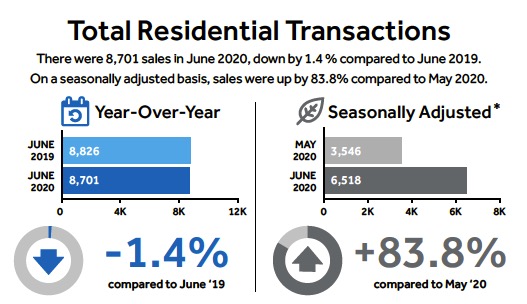
There were 8,701 sales in June 2020, down by 1.4% compared to June 2019 but up 83.8% compared to May 2020. Sales growth in the detached and townhouse segments outside of the City of Toronto experienced sizable growth of 10.5% and 7.8% respectively.
Source: TRREB
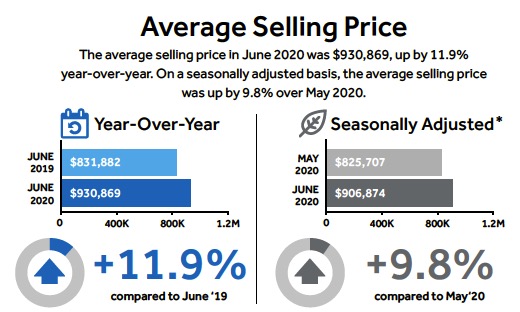
The average selling price was $930,869, up 12% versus year ago and up 9.8% compared to May 2020.
Source: TRREB
There were 16,153 new listings in June 2020, which is up by 2.1% year-over-year. However total active listings were down by 28.8% compared to June 2019, meaning a continued lack of inventory.
Inventory
is low. Demand is strong. If you were ready to sell now - as in right
now - it would be a great time to list your property for sale. As long
as demand outpaces supply, prices will stay strong. However, this hot
market is very volatile and could change depending on if the virus
spikes and/or another economic shutdown takes place.
Real Estate Market Outlook
With all the negativity in the press about the outlook for real estate prices (https://www.livabl.com/2020/05/home-prices-could-fall-over-12-months.html), I wanted to spend some time looking at the rationale behind Royal LePage's more optimistic forecast.
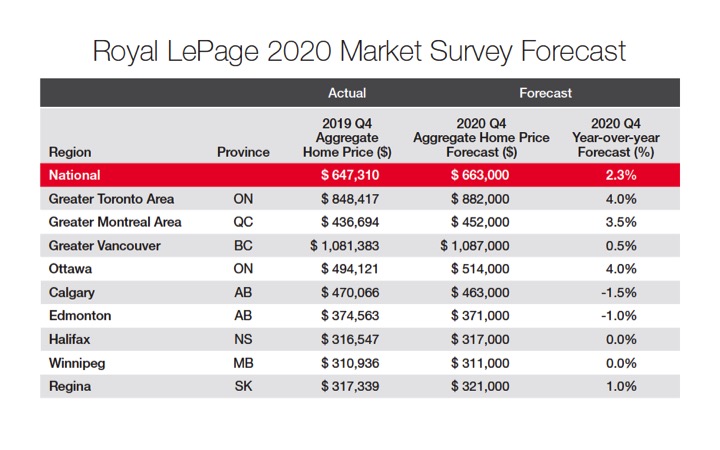
Royal LePage is predicting the aggregate price of a home in Canada to increase by 2.3% in 2020. (This forecast has been revised upwards since the last release in April.) Home prices in the GTA, Montreal and Ottawa are predicted to outpace the national market due to pent up demand before COVID-19.
In a recent presentation, Royal LePage President and CEO, Phil Soper outlined the rationale behind the relatively upbeat forecast.
First, he pointed to the fact that Canada is recognized globally as a great place to live. For the fifth time, Canada was ranked #1 for Quality of Life by U.S. News and World Report. This reputation ensures continued immigration and growth once the borders reopen and the pandemic outbreak is under control.

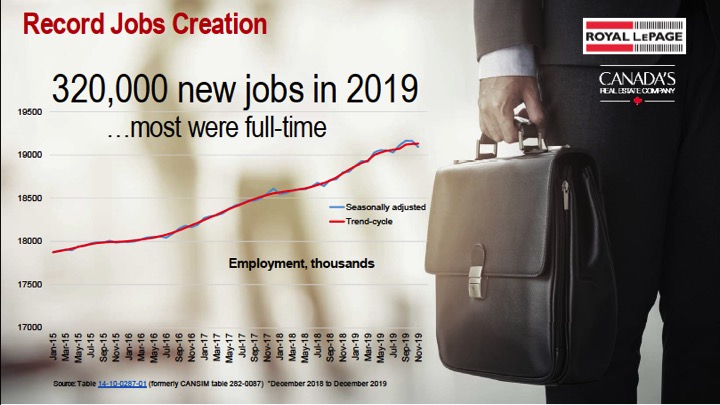
Secondly, he pointed Canada's strong economic growth and record job creation before the pandemic forced the government to halt economic activity in favour of public health.
The strong start to housing sales in early 2020 indicates demand.

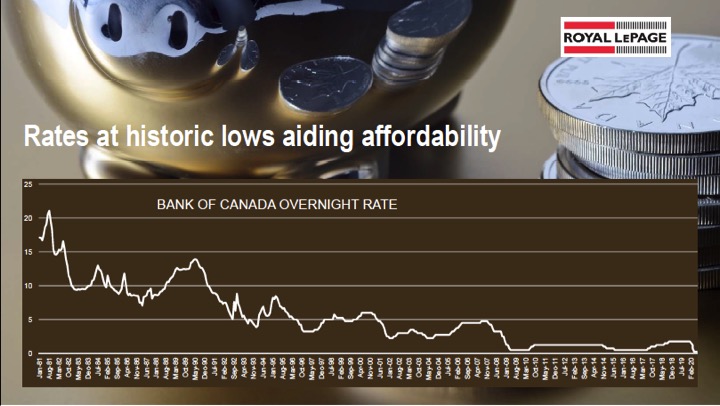
Historically, low mortgage rates will attract home buyers back to the market.
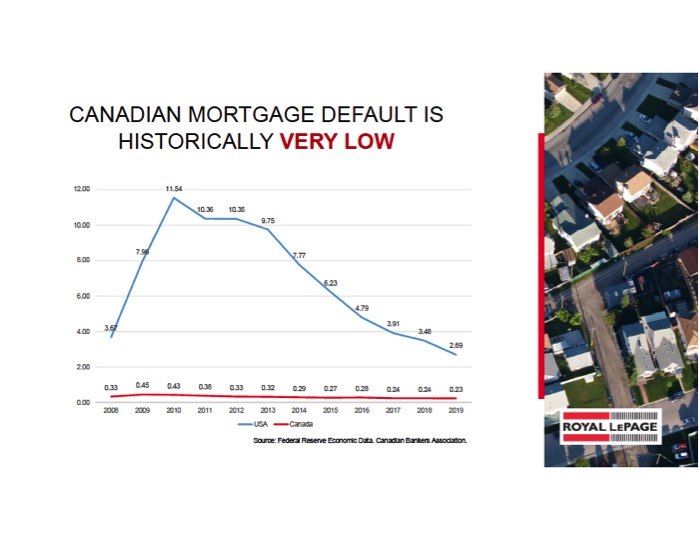
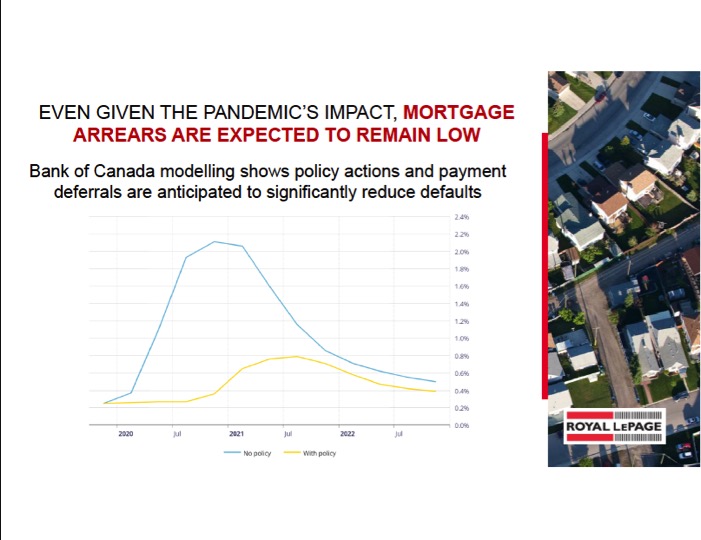
Regarding whether or not homeowners have been able to manage their household debt and stay solvent during COVID-19, Phil pointed out that Canada has far less mortgage default in general compared to the U.S. (the blue line). Relief programs, such as the CERB, have helped Canadians cover their bills in the short term and mortgage arrears are expected to remain low.
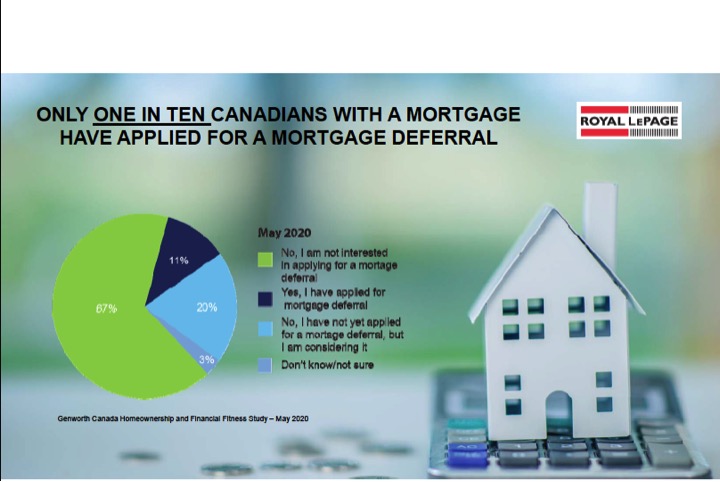
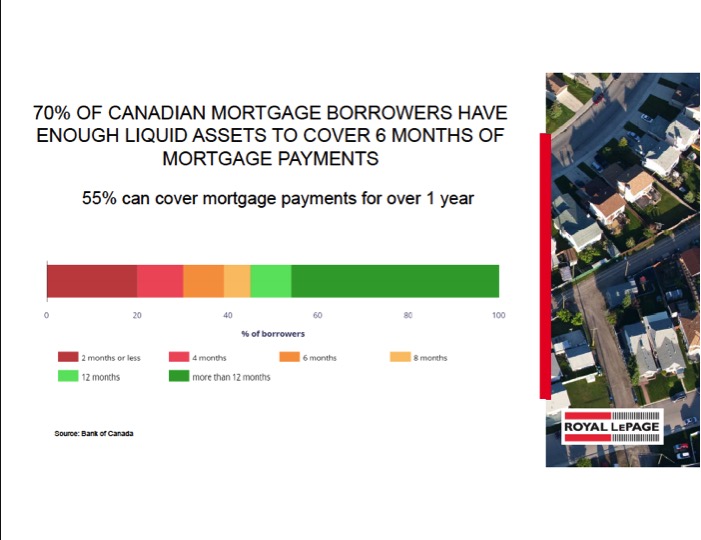
Even though most lenders have offered mortgage deferrals for borrowers in need, most Canadians have not taken up the offer.
According to a Bank of Canada study, Canadian borrowers are well positioned to stay in their homes.
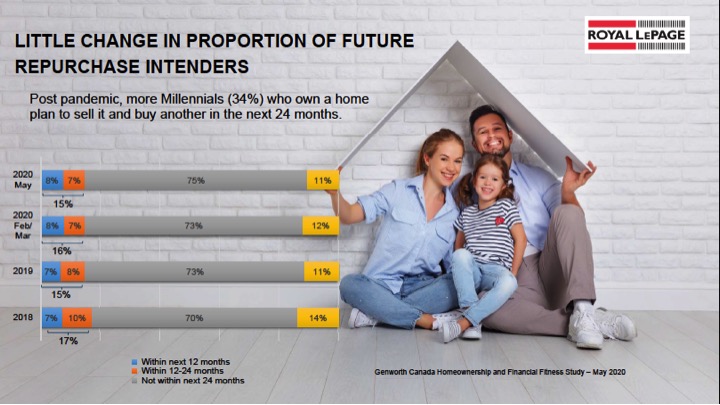
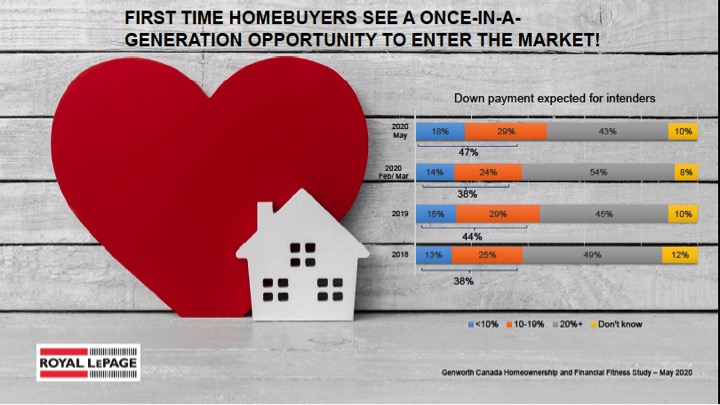
A study fielded in May showed that the pandemic hasn't dampened enthusiasm and optimism about buying a home and first-time home buyers see the current environment as a real opportunity to get into the market.
Selling a Home During COVID-19
Phase Two of Reopening
With
Phase Two of the reopening of Ontario, our Royal LePage Real Estate
Services, Ltd offices have reopened to staff, with REALTORS® using the
space either during pre-scheduled times or by appointment. This makes it
easier to get back to normal work for us. The offices remain closed to
the public. Royal LePagers
continue to follow rigorous protocols stipulated by our brokerage
including following all public health and regulatory precautions and
screening/obtaining COVID-19 disclosure from both sellers and buyers.
As Ontario enters Phase Two of reopening the province, the Ontario Real Estate Association (OREA) has published a "Guidance on Real Estate Transactions" outlining how REALTORS® are to conduct business. Once again, the main theme is that health and safety come first. Here are the recommendations:
Digital Communication
Digital Communication. As much as possible, communicate with clients using digital methods rather than face-to-face. This can include video conferencing as well as email/text based messaging.
Digital Documents. Make use of electronic paperwork and signature software as much as possible.
Digital Tools. Use digital marketing materials as well as virtual tools and virtual open houses to minimize person-to-person contact.
Door Knocking. Refrain from door-knocking (to try to find homeowners wanting to sell) and paper marketing materials like door hangers or postcards.
Open Houses
Open houses are prohibited as long as Ontario is under a State of Emergency. Currently, the State of Emergency is in place until July 22, 2020 although that may be extended.
Showings
In this environment, putting together a list of 'for sale' properties and traipsing through them all is not appropriate. With REALTORS® using virtual tour technology, buyers should be viewing properties remotely first, and only making an appointment to go in person to the ones that perfectly meet their needs.
Clean & Disinfect. The home should be thoroughly cleaned and disinfected before every showing.
Wear PPE. Both REALTORS® and buyers should be wearing masks and gloves.
Don't shake hands. Self-explanatory.
Physical distance.
REALTORS® and buyer clients should stay 2 metres apart where possible.
The homeowners should be out of the property during the showing.
Limit time in the property. View the property thoroughly, but don't tarry.
Open doors and turn on lights. The homeowners or listing agent should do this so that buyers and buyers' agent don't need to touch anything in the home.
Improve ventilation. If possible, open windows
No paper. Normal practice would be for the buyers' REALTOR® to bring paper copies of the listing details to give to the buyers. This should be done digitally instead.
Space out the showings. Provide enough time in between showings for the homeowner or listing agent to clean and air out the property.
Limit the number of people. Only the buyers who will be on the contract should view the home - no other family or friends.
Travel apart. Buyers and their agent should meet at the property and travel in their own cars.
Clean and sanitize. Buyers and agent should clean and use hand sanitizer.
Don't use the bathroom. (I mean, you should never use the bathroom at a showing, right? That's what Tim Hortons is for.)
The Tension
Speaking at a recent Royal LePage Sales Conference, leadership coach and author of "Leadership Isn't For Cowards", Mike Staver used an interesting construct to help REALTORS® think about their clients' motivations during COVID-19. I share it because its really about how different people are reacting to the pandemic and how a difference in primary motivation can cause tensions such as those we've seen between the mask-wearers and the non-mask wearers.

Essentially, it reminds us that some people are feeling the most vulnerable about their health, while others are feeling the most vulnerable about their financial situation. Others are the most concerned with having their liberties constrained by rules or the judgements of others. The tension between these three drivers is elastic with each one of them playing a part in one way or another.
Applied to real estate, it helps to explain why, for example, a seller might feel very uncomfortable allowing in-person viewings of their home, while a number of potential buyers are lining up (figuratively) to walk through. However, if that seller puts extreme restrictions on showings and therefore no one is able to see the property or becomes interested in buying it, the seller's motivation might change. They might become more concerned about their financial situation and loosen up the showing restrictions in order to garner a sale.
Being mindful of the tension between motivations helps us to be empathetic to others during a time many may find to be very stressful.


Comments
Post a Comment